Few smartphones in recent memory have attained the legendary reputation of the iPhone 13 Pro Max. When Apple unveiled this flagship device, it didn’t just iterate on previous generations; it solved two of the biggest complaints users had held for years: battery life and screen refresh rates. By pairing a massive battery with a butter-smooth 120Hz ProMotion display, Apple created a device that set a new benchmark for premium smartphones.
If you are looking for maximum smartphone capability without paying current top-tier prices, the iPhone 13 Pro Max remains one of the most compelling options on the market. But how does this heavyweight hold up under real-world demands today? Does its size still feel practical, do its cameras keep pace with modern computational photography, and does its A15 Bionic processor still deliver top-shelf performance?
In this comprehensive review, we dive deep into every aspect of this iconic device—evaluating its design, display, cameras, performance, battery endurance, and overall value proposition.
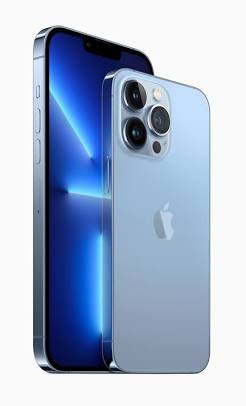
Technical Specifications at a Glance
Before examining the everyday experience, let’s break down the core hardware specifications that power the device:
| Feature | Specification Details |
| Display | 6.7-inch Super Retina XDR OLED, 2778 x 1284 pixels (458 ppi), 120Hz ProMotion |
| Processor | Apple A15 Bionic (6-core CPU, 5-core GPU, 16-core Neural Engine) |
| RAM & Storage | 6GB RAM; 128GB, 256GB, 512GB, or 1TB storage options |
| Rear Cameras | 12MP Main (f/1.5, Sensor-shift OIS), 12MP Ultrawide (f/1.8, Macro), 12MP Telephoto (3x optical) |
| Front Camera | 12MP TrueDepth (f/2.2) with 4K HDR video support |
| Battery & Charging | 4,352 mAh, 20W+ wired fast charging, 15W MagSafe, 7.5W Qi wireless |
| Build Materials | Surgical-grade stainless steel frame, Ceramic Shield front, textured matte glass back |
| Dimensions & Weight | 160.8 x 78.1 x 7.65 mm; 240 grams (8.47 oz) |
| Water Resistance | IP68 rating (maximum depth of 6 meters up to 30 minutes) |
Design and Build Quality: Premium, Heavy, and Built Like a Tank
Holding the iPhone 13 Pro Max for the first time, one thing becomes immediately obvious: this is a substantial piece of hardware. Tipping the scales at 240 grams, it is notably heavier than most standard flagship phones. The weight comes directly from Apple’s decision to use surgical-grade stainless steel for the flat side rails, combined with a significantly enlarged internal battery pack.
+-------------------------------------------------------+
|  Pro Design Characteristics                          |
|  • Stainless Steel Band (High durability, reflective) |
|  • Matte Textured Glass (Resists fingerprint smudges) |
|  • Ceramic Shield Front (Improved drop resistance)    |
|  • IP68 Water Resistance (6 meters depth for 30m)    |
+-------------------------------------------------------+
The rear glass features a frosted matte finish that feels silky to the touch and resists fingerprint smudges remarkably well. Apple introduced the iconic Sierra Blue colorway alongside traditional favorites like Graphite, Gold, and Silver, later adding Alpine Green.
The camera bump on the back is noticeably larger than on previous generations. Because of the larger optical sensors, the lenses protrude further, causing the phone to wobble when laid flat on a table without a case.
The front display features the Ceramic Shield cover, which offers superior drop protection compared to standard smartphone glass. Additionally, Apple reduced the width of the display notch by 20% compared to the iPhone 12 series, granting a slightly cleaner look, even if the extra status bar area wasn’t immediately used for additional icons.
Design Takeaway: If you prefer lightweight, one-handed devices, this phone will take some getting used to. However, if you equate heft with premium craftsmanship and structural durability, few devices feel as luxurious in hand.
The Display: 120Hz ProMotion Meets 6.7-Inch OLED Greatness
For years, Android users pointed to high-refresh-rate screens as a key advantage over iPhones. When Apple introduced the iPhone 13 Pro Max, it finally answered those calls with ProMotion technology.
What Makes ProMotion Special?
ProMotion isn’t just a static 120Hz screen. It uses an adaptive refresh rate panel that dynamically scales between 10Hz and 120Hz depending on what you are doing on the device:
Fast Scrolling & Gaming (120Hz): Renders animations, system navigation, and supported games with incredible fluidity.
Reading Static Text (10Hz–24Hz): Drops the refresh rate down to save battery life when screen elements are motionless.
Video Playback (24Hz–60Hz): Matches the native frame rate of movies and YouTube content precisely to prevent judder.
Dynamic Refresh Rate Scaling:
[ Static Article ] ---> 10Hz  (Maximum Power Saving)
[ Video Streaming] ---> 24Hz - 60Hz (Native Match)
[ UI Navigation  ] ---> 60Hz - 120Hz (Smooth Response)
[ Fast Gaming    ] ---> 120Hz (Ultra-Low Latency)
The 6.7-inch Super Retina XDR OLED panel delivers vibrant color reproduction, deep true blacks, and stellar contrast ratios. Peak outdoor brightness reaches 1,000 nits for typical outdoor viewing and scales up to 1,200 nits when consuming HDR content. Whether you are editing photos under direct sunlight or watching a Dolby Vision movie in a dim room, the visual experience remains top-tier.
Processing Power: The Lasting Power of the A15 Bionic
At the heart of the iPhone 13 Pro Max lies the A15 Bionic silicon. Built on TSMC’s 5-nanometer process, this chip consists of a 6-core CPU (2 performance cores and 4 efficiency cores), a 5-core GPU, and a 16-core Neural Engine capable of performing 15.8 trillion operations per second.
Real-World Performance & Gaming
In daily use, the A15 Bionic provides lightning-fast response times. Launching heavy applications, switching between dozens of open browser tabs, and processing 4K video clips happen effortlessly.
For mobile gamers, the 5-core GPU delivers graphical capabilities that comfortably handle demanding titles like Genshin Impact, Call of Duty: Mobile, and PUBG Mobile at maxed-out settings with stable frame rates.
Thermal Efficiency
One underrated benefit of the A15 Bionic is its thermal design. Thanks to efficient power distribution and the larger body frame of the Max chassis, the device handles heat dispersion exceptionally well. It resists aggressive thermal throttling far better than thinner phones, meaning game performance stays smooth even during extended playing sessions.
Camera Capabilities: Professional Photography in Your Pocket
The triple-camera array on the back of the iPhone 13 Pro Max isn’t just larger physically—it represents a massive hardware upgrade over its predecessor. Apple equipped all three lenses with bigger sensors, wider apertures, and improved night shooting features.
+------------------------------------------------------------------------+
| Camera System Breakdown                                                |
+------------------------------------------------------------------------+
| Main Wide   | 12MP | f/1.5 aperture | 1.9µm pixels | Sensor-shift OIS   |
| Ultrawide   | 12MP | f/1.8 aperture | 120° FOV     | Autofocus (Macro)  |
| Telephoto   | 12MP | f/2.8 aperture | 3x Optical   | Optical Zoom       |
+------------------------------------------------------------------------+
1. Main Wide Sensor (f/1.5 Aperture)
The primary camera features a massive sensor with 1.9µm pixels and an ultra-wide f/1.5 aperture. It pulls in up to 2.2 times more light than the iPhone 12 Pro Max. Paired with Apple’s Sensor-shift Optical Image Stabilization (OIS), shot stability in low light is outstanding, resulting in reduced noise and crisp detail during Night Mode captures.
2. Ultrawide & Macro Photography
The ultrawide camera received an upgrade to an f/1.8 aperture with autofocus capabilities. Furthermore, macro photography made its official debut on the iPhone 13 Pro Max, allowing users to focus on subjects as close as 2 centimeters away. The device automatically switches to the ultrawide camera as you move closer to an object, revealing intricate textures on flowers, insects, fabrics, and jewelry.
3. 3x Optical Zoom Telephoto Lens
Replacing the older 2.5x zoom, the 3x telephoto lens brings a 77mm equivalent focal length. This focal range is ideal for portrait photography, creating natural optical background blur (bokeh) without relying purely on software separation.
4. Photographic Styles and Cinematic Mode
Apple introduced two major software tools with this generation:
Photographic Styles: Unlike traditional filters that apply a blanket color cast over the entire photo, Styles apply custom tone and warmth adjustments to specific areas while preserving skin tones. Options include Rich Contrast, Vibrant, Warm, and Cool.
Cinematic Mode: Bringing rack focus to mobile video, Cinematic Mode records video with a shallow depth of field and automatically shifts focus between subjects based on where they are looking. Crucially, you can edit the focal points and keyframes after the video has already been recorded directly in the Photos app.
Battery Life: The Legend That Still Refuses to Die
If there is one single feature that cemented the legendary status of the iPhone 13 Pro Max, it is unquestionably its battery life.
Apple packed a 4,352 mAh battery inside this chassis—a huge jump over the 3,687 mAh battery found in the iPhone 12 Pro Max. When combined with the power efficiency of the A15 Bionic chip and the variable ProMotion display, the end result was game-changing battery endurance.
Typical Battery Drain Breakdown (Full Day Usage):
===================================================
Screen-on Time (8 Hours Active Use):
- Video Streaming (YouTube/Netflix):  ~20%
- Social Media Scrolling:             ~15%
- Web Browsing & Emails:              ~12%
- Gaming & Camera Testing:            ~25%
---------------------------------------------------
Remaining Battery at End of Day:       ~28%
===================================================
For moderate to light users, this is easily a two-day smartphone. Even heavy power users who spend hours streaming video, using GPS navigation, capturing 4K clips, and playing games will find it nearly impossible to drain the battery in a single day.
Charging Speeds
While battery life is exceptional, charging speed is standard:
Wired Fast Charging: Supports up to 27W peak power delivery (using a 20W or higher USB-PD wall adapter), taking the battery from 0% to 50% in roughly 30 minutes.
MagSafe Wireless: Charges at up to 15W using official MagSafe pucks.
Qi Wireless: Charges at 7.5W on standard wireless charging pads.
Software Longevity & iOS Ecosystem Integration
Because Apple designs its custom silicon alongside its operating system, the iPhone 13 Pro Max continues to receive seamless software updates and major iOS releases.
+-------------------------------------------------------+
|  iOS Ecosystem Advantages                             |
|  • AirDrop for instant file sharing                   |
|  • iMessage & FaceTime integration                    |
|  • Apple Watch & AirPods automatic pairing            |
|  • Universal Clipboard with Mac / iPad                |
|  • Guaranteed long-term security patches              |
+-------------------------------------------------------+
Historically, Apple provides 6 to 7 years of full software support for its flagship devices. This long runway means that owners can expect security updates, software enhancements, and app compatibility for years to come, giving the phone high resale value compared to Android devices from the same era.
Comparing the Options: How Does It Stack Up Today?
Comparing the iPhone 13 Pro Max to newer releases reveals just how well this phone has aged. Let’s examine how it compares to its immediate successors and key competitors:
iPhone 13 Pro Max vs. iPhone 14 Pro Max
Display: The 13 Pro Max features the traditional notch design, while the 14 Pro Max introduced the Dynamic Island and an Always-On Display.
Main Camera: The 13 Pro Max uses a 12MP sensor, whereas the 14 Pro Max upgraded to a 48MP main camera. However, in standard daylight and Night Mode shots, differences are subtle unless you shoot in RAW.
Performance: A15 Bionic vs. A16 Bionic—day-to-day speed is virtually indistinguishable for everyday tasks.
iPhone 13 Pro Max vs. iPhone 15 Pro Max / 16 Pro Max
Port Selection: The 13 Pro Max utilizes Apple’s classic Lightning port, while 15 and 16 series models transitioned to USB-C.
Weight & Ergonomics: Modern Pro Max models feature contoured titanium edges, making them lighter than the stainless steel frame of the 13 Pro Max.
Action Button & Camera Control: Newer iterations replaced the traditional mute switch with customizable action buttons.
For users deciding between a mid-tier new phone or a pre-owned flagship, the iPhone 13 Pro Max usually comes out on top due to its superior build quality, telephoto lens, and long battery life.
Pros and Cons Breakdown
To help you make an informed decision, here is an honest evaluation of the device’s main strengths and drawbacks:
What We Love (Pros)
Unbeatable Battery Endurance: Consistently outlasts almost every competitor in its class.
Gorgeous 120Hz ProMotion Screen: Crisp contrast, outdoor brightness, and adaptive smoothness.
Outstanding Camera Versatility: Excellent Night Mode, 3x optical zoom, and close-range macro capabilities.
Solid Stainless Steel Build: Premium look and feel with high drop resistance.
A15 Bionic Longevity: Fast processing performance that shows no signs of slowing down.
Where It Falls Short (Cons)
Heaviness and Bulk: At 240g, it can cause hand fatigue during long typing or reading sessions.
Lightning Port: Misses out on universal USB-C convenience.
No Always-On Display: Lacks the persistent lock screen clock introduced in later models.
Charging Speeds Are Average: Takes around 75–90 minutes for a full 0–100% charge cycle.
Who Should (and Shouldn’t) Buy It?
So, who should actually buy the iPhone 13 Pro Max today?
Ideal For:
Power Users on a Budget: Anyone who wants a big-screen “Pro” iPhone experience (120Hz display, triple cameras) without paying full current-generation prices.
Battery Life Seekers: Travelers, commuters, and field workers who need a phone that guaranteed lasts all day and into the night.
Content Creators & Mobile Photographers: Users who want reliable 4K video recording, macro capabilities, and flat color profiles for mobile color grading.
Not Recommended For:
Small Hand / One-Handed Phone Lovers: If you prefer compact, lightweight devices, consider the standard 13 Pro or base iPhone models instead.
Users Who Want USB-C Connectivity: If you are trying to unify all your devices under a single USB-C cable, you’ll need an iPhone 15 series or newer.
Final Verdict: The Sweet Spot of Apple’s Pro Lineup
Ultimately, the iPhone 13 Pro Max stands as a high-water mark for Apple’s hardware design. By fixing the key compromises of earlier models and introducing groundbreaking battery life, Apple created a phone that remains fast, modern, and highly capable years after its initial release.
With its 120Hz ProMotion screen, robust A15 Bionic processor, triple-camera system with macro mode, and rock-solid stainless steel frame, it delivers 90% of the modern flagship experience at a fraction of the cost. If you don’t mind the extra weight in your pocket and the legacy Lightning port, it remains one of the smartest smartphone purchases you can make today.